Product added to your enquiry
What can children tell us before a playground is designed?
Uncategorized
27 Oct 2026
A child asking for a bigger climbing structure may want a harder challenge. Or they may be looking for somewhere to climb with their friends. Finding out what appeals to them helps us work out what the playground needs to offer before choosing the equipment.
For a school or council, these conversations are a useful starting point for a playground brief. Children bring their experience of using the space. We can help work through how their ideas might fit the site and your budget.
Find out what they’d keep
If you’re upgrading a playground, take some time to walk around it with the children who use it. Ask them to show you where they like to play and explain what happens there. A favourite spot may owe as much to the game they’ve invented as to the equipment itself. You’ll want to understand that before deciding what stays and what goes.
The less popular areas deserve a conversation too. A child who rarely uses a piece of equipment may find it difficult to reach or feel uncomfortable joining the group already there. Watching can give you a starting point, but ask rather than guessing at the reason.
Make room for different answers
Explain the project before asking for ideas. If you’re replacing one play unit and keeping the rest of the playground, say so. That gives children a clear area to think about without promising a complete rebuild.
A class discussion is one option. Drawing or marking up a map may suit others, particularly when it’s followed by a chance to explain what they’ve shown. Leave room for a smaller conversation as well. You don’t need every child to contribute in the same way.
Teachers and carers can help choose an approach that suits the children involved. Include different ages and abilities, and seek out the views of children who spend less time on the existing equipment.
Keep their explanations with the drawings or notes. When those ideas reach the designer, the reason behind a suggestion is easy to lose if only the requested item has been recorded.
Bring the ideas into the design
You may hear the same request several times. That helps establish a priority, although a concern raised by just one child can still need attention. Difficulty reaching an activity shouldn’t have to win a vote before it makes its way into the brief.
For a request about more challenging climbing, we’d look at the routes through the equipment and where the difficulty could vary. A request for somewhere to play with friends leads us to consider shared activities and room for children to gather. Once we know what’s behind an idea, we can discuss options that suit the available space.
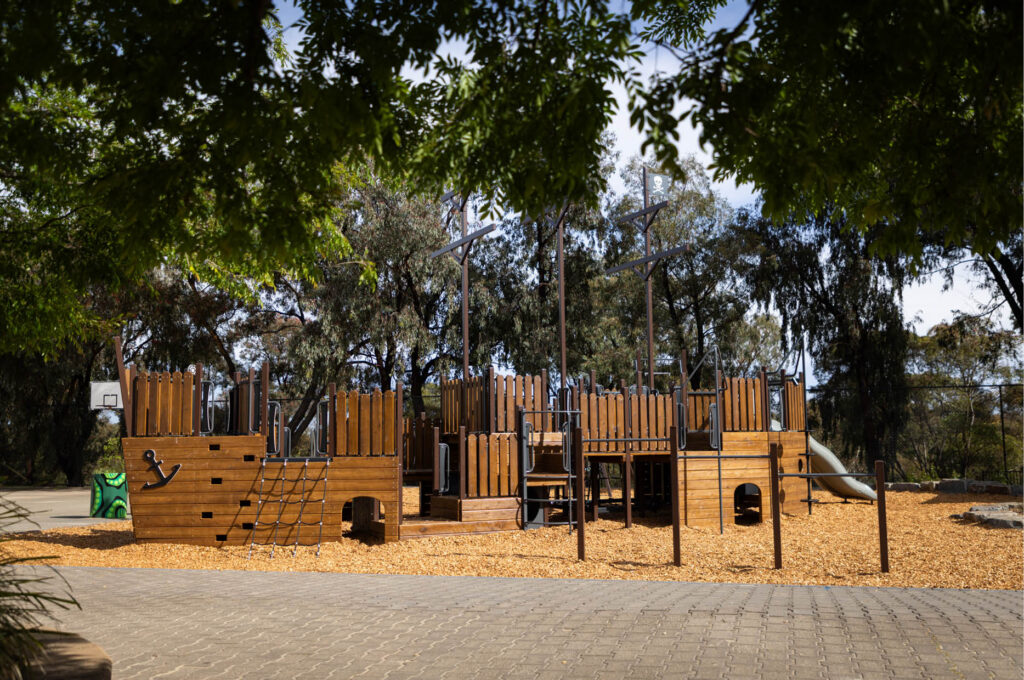
At Golden Grove Primary School, the school and adventure+ involved students throughout the design process. Their input helped shape the pirate-themed playground, which includes climbing elements, slides and interactive play.
Bring us the comments as well as any wish list. You don’t need to translate them into equipment specifications first. Our guide to creating a school playground brief covers the wider project information, and we can help you work through anything you’re unsure about.
Go back to the children with the design
A concept gives children something to respond to. Show them how their ideas have been used and ask whether you’ve understood them correctly. If a suggestion couldn’t be included, explain why and discuss any alternative.
The WA Commissioner for Children and Young People’s participation guidelines recommend letting children check the record of their views and explaining how those views influenced decisions. Allow time for that conversation before the design is finalised, when there’s still an opportunity to clear up a misunderstanding.
If you’ve started gathering ideas for a playground, talk to an adventure+ play consultant about what you’ve heard. We can help you decide what those ideas could mean for the design.
Related articles


© 2026 Adventure Playgrounds Pty Ltd. All rights reserved. ABN 28 120 543 259 / ACN 120 543 259